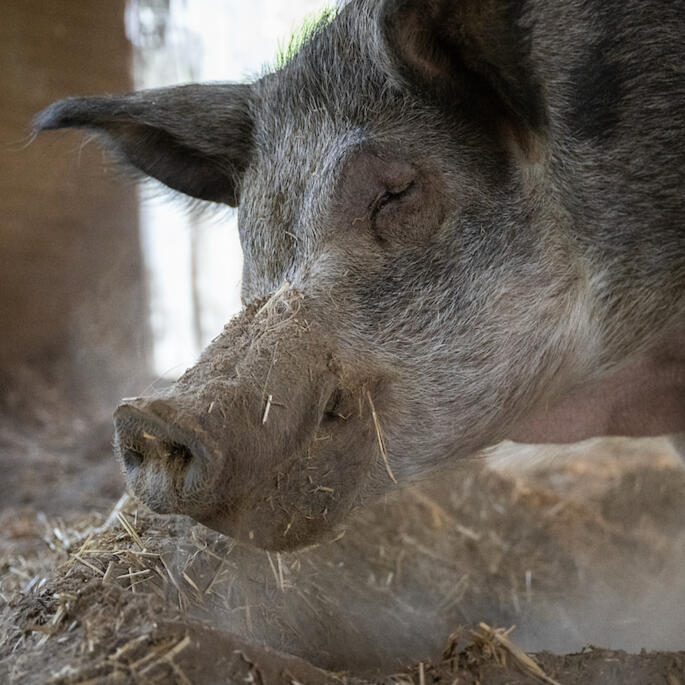
fight factory farms
help the most neglected animals
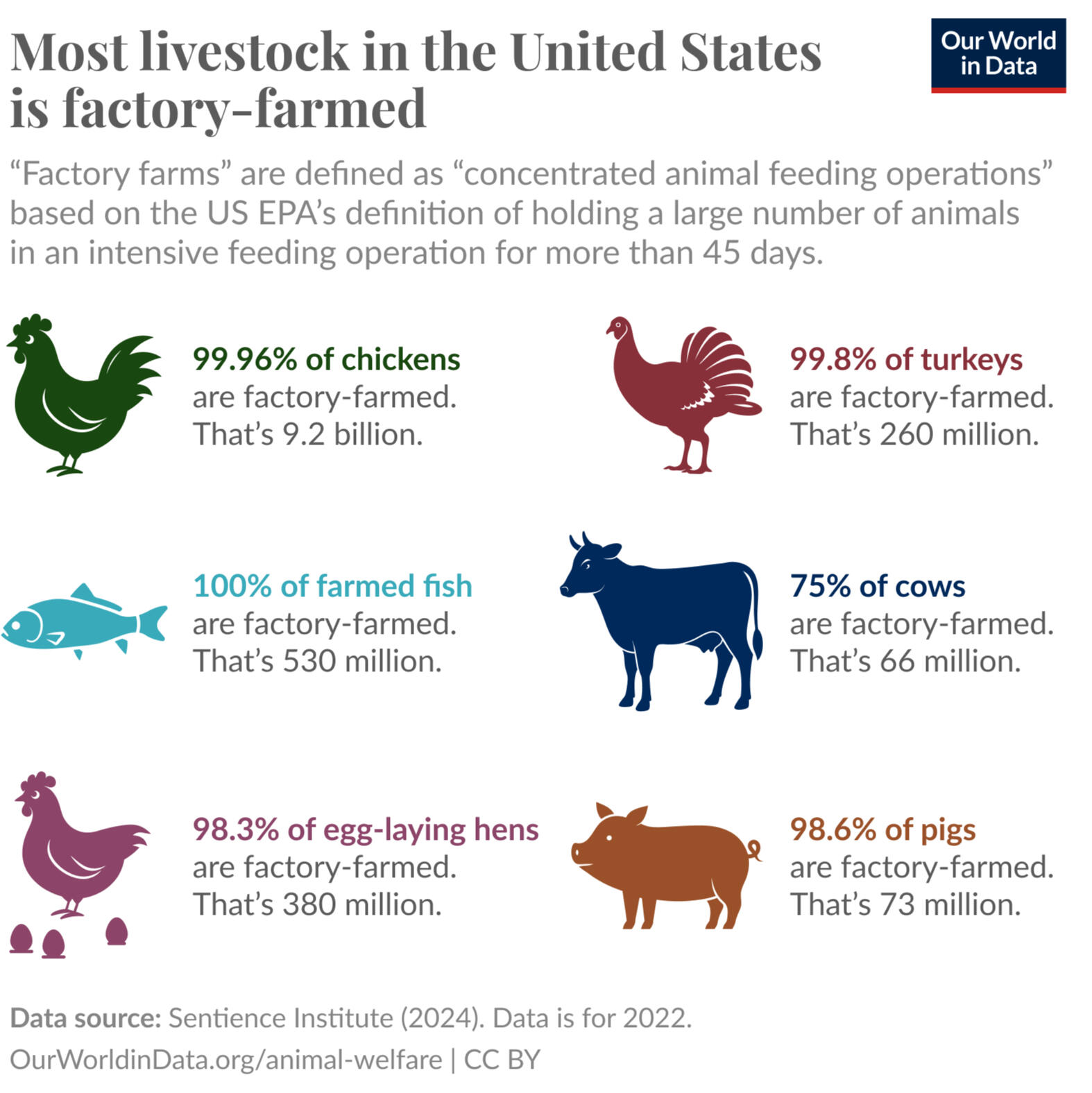
99% of our food comes from intensive conditions
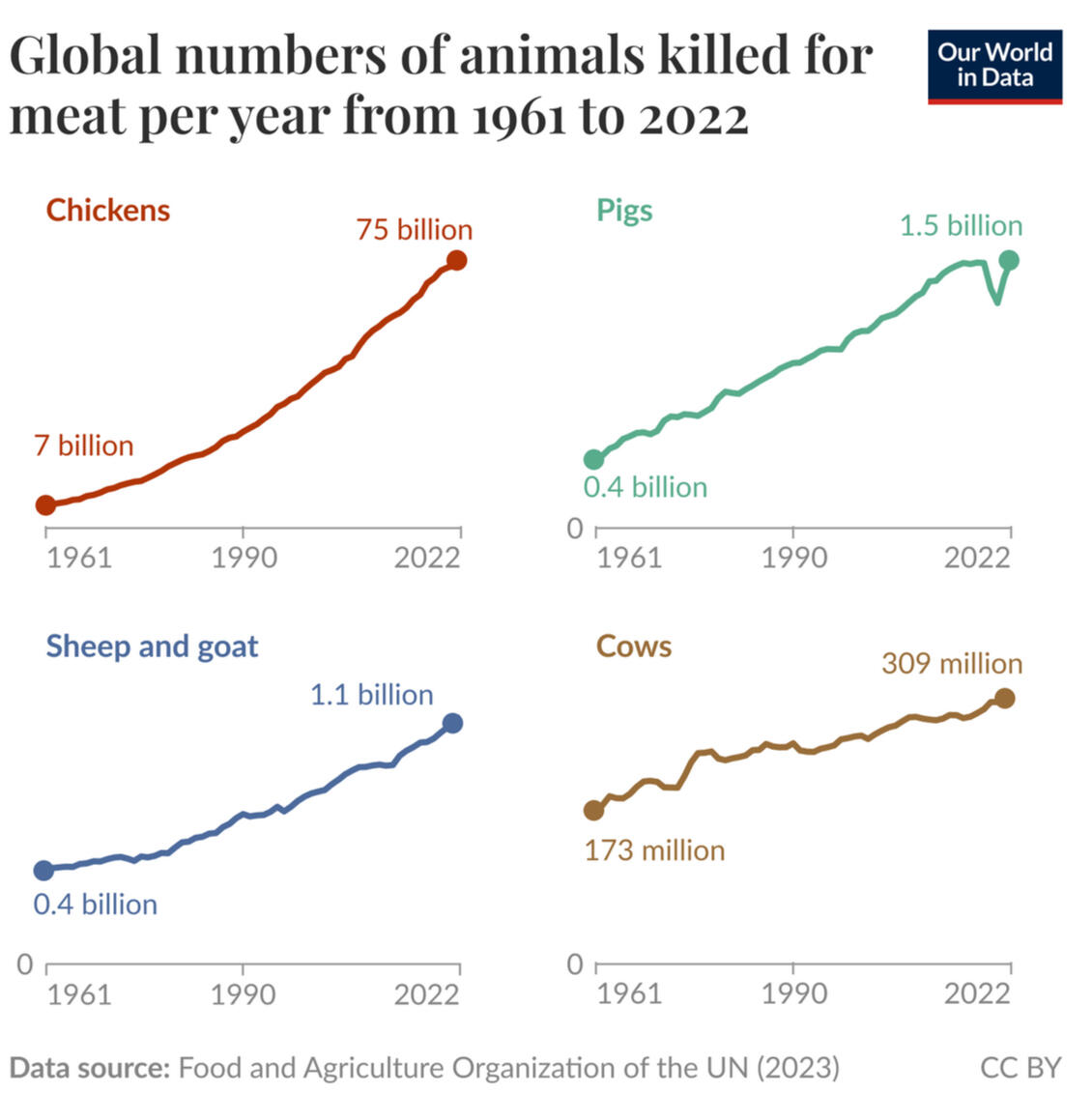
corporations hide cruelty in sheds and feedlots, they want us to think of happy, small farms - a nostalgia for something that doesn't exist. Yes, there are small farms, but we eat 33 billion animals each year in the US, and 85 billion worldwide. That is not grown on a local farm.The rise of factory farms is tied with the rise of meat consumption and number of animals killed each year. Factory farms started in the 1950s - in 1961, the average person ate 6.6 chickens a year, in 2023, they ate 22.6. That's 528 vs 1808 lives over 80 years.
try reducing
Reducing is more important than perfection. If you can't give up cheese then don't. You can still make an effort like you do with recycling or driving less. Consider reduction strategies like:
meatless mondays
meatless before 6 pm
only when you eat out
only on the weekends or holidays
learn more
free documentary about the reality of factory farms
check out What the Health or Gamechangers for info on health benefits of meat reduction
get a free Veg Starter Kit or check here for more tips and recipe ideas
try something structured like a free 30 day challenge to learn tips and tricks to reduce consumption
get involved!
You don't have to be vegan to attend an event, find community, or take action to help animals.
find social events on meetup or facebook groups
push for change through easy email campaigns
check out local veg restaurants - use happycow
visit a local farm sanctuary
donate to help the most animals
help even more animals - donate
Donate to help farmed animals! Dogs and cats get a large percentage of animal based donations, but only make up a very small number of animals suffering.From pushing corporations to use humane practices to working with governments for macro change - these orgs are fighting for organizational change and could help an incredible number of animals. Per dollar, your money will help more animals when donating to fight factory farms.For example, $25 a month saves 583 animals a year!